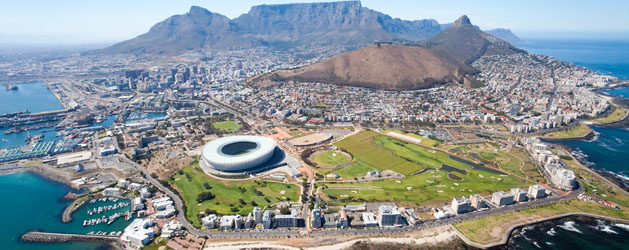
South Africa & Zambia
10 Day Tour | November 9-18, 2026
Bethlehem Baptist Church
Reverend Lionel D. Wilson, Pastor
Online Reservation Insurance Info
Wholesale Tour Packages Since 1987 - Call Us Toll Free: 800.322.0788
10 Day Tour | November 9-18, 2026
Bethlehem Baptist Church
Reverend Lionel D. Wilson, Pastor
| Date | Price | Single Supplement |
|---|---|---|
| November 9-18, 2026 | $4,793* | $1,150 |
| *Airfare not included Reservation Due: December 5, 2025 Final Payment Due: September 4, 2026 | ||
Included
Flights within the tour (Cape Town to Livingstone, Livingstone to Johannesburg), 8 nights lodging at 4 star or better hotels, Breakfast daily, 3 lunches, 5 dinners, Full time English speaking tour escort, Services of air conditioned deluxe motor coach, All guides, entrances, touring and transportation as appears on itinerary, Baggage handling at hotels (one piece), Pilgrim payment processing by check, Visa, Master Card, or Discover
Not Included
Airfare, 5 lunches, 3 dinners, all drinks, Tips to driver, guides, and hotel staff, Zambia and/or Zimbabwe Visa, Optional travel insurance (7.95% or 10.85% of tour cost)
Day 1: Flight
Take an overnight flight from Atlanta towards South Africa. As its name might suggest, South Africa is a country located on the southernmost tip of the African continent. South Africa is well-known on the global stage for its long struggle with Apartheid, transitioning to a democratic nation in 1994. Its formative histories, however, are much longer and more complex than the narrow lens of Apartheid allows. Contact between the indigenous societies of the Khoi and the San, and the waves of migration that brought various Bantu civilizations south from West Africa are a couple of examples. Like many other African countries, South Africa is home to varied people groups, cultures, and religious belief systems; for this reason, it is often called the “Rainbow Nation”. It is also geographically rich and varied, comprising 8 different biomes that are spread across the country, and is home to a spectacular array of plant, mammal, and bird species.
Day 2: Cape Town
Arrive in Cape Town airport. Transfer to the hotel for check in and then to GOLD Restaurant for dinner. GOLD Restaurant is a vibrant, eclectic Pan-African experience in the heart of Cape Town. A typical evening at GOLD Restaurant starts with an interactive drum circle, teaching participants how to play the djembe to the rhythms and sounds of Africa. After a traditional hand-washing ceremony, participants are led on a culinary adventure through Africa. Overnight in Cape Town for 3 nights. (D)
Day 3: Cape Town
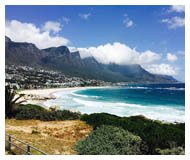
Declared a World Heritage Site, the notorious Robben Island prison is where Africa’s political prisoners, including former President Nelson Mandela, were kept during the colonial and Apartheid years of South Africa. You will travel to the island by ferry and be accompanied by a former political prisoner on a visit to the prison facilities. Students will gain first-hand experience of the island's rich multi-layered history, shaped by its many different occupations and uses. The Slave Lodge is one of the oldest buildings located in Cape Town city centre and was built in 1679. The building has a long rich history and is currently a museum that exhibits the history of slavery in South Africa and other temporary exhibits that address issues and raise human rights awareness. Students will be guided on a historical journey, providing insights into the history of Slavery in South Africa. Established in 1994 by former residents and activists, the District Six Museum in Cape Town honors the 60,000 non-white individuals forcibly removed during apartheid in the 1960s and 1970s. Located near Greenmarket Square, the museum displays donated artifacts like street signs and photographs alongside personal stories, recalling the once vibrant multi-racial community of District Six. Exhibits include maps, recordings, and home interior reconstructions. Visitors can explore independently or take guided tours by former residents, including site walks highlighting significant locations. Visit to the Bo-Kaap neighborhood, known for its brightly colored homes and cobblestoned streets. The area is traditionally a multicultural neighborhood. According to the South African Heritage Resources Agency, the area contains the largest concentration of pre-1850 architecture in South Africa, and is the oldest surviving residential neighborhood in Cape Town. (B)
Day 4: Cape Town
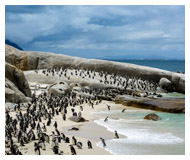
Boulders Penguin Colony is found in the seaside village of Simon’s Town in False Bay. It is home to a land-based colony of African Penguins that are considered endangered because their population is declining rapidly, mostly due to commercial fisheries and shifts in prey populations. However, this colony has an estimated 2000 to 3000 birds from just two breeding pairs which settled at Boulders Beach in 1982. Breeding penguins can be viewed from a wheelchair-friendly wooden boardwalk and on the private beach, which also offers the opportunity to swim with the penguins. The protected habitat forms part of the Table Mountain National Park Marine Protected Area. The SANParks staff are available to give guided excursions. Table Mountain is an iconic flat-topped mountain that overlooks the city of Cape Town. The mountain has been named one of the official New 7 Wonders of Nature because of the incredible diversity of indigenous flora found on the mountain. Lessons about the fauna and flora while visiting Table Mountain can be incorporated into a program. Students have the option of riding the cable car or hiking to the top of the mountain, experiencing panoramic views as they ascend to the summit. The view from the top provides a broader understanding of the layout of the city. Table Mountain is also an ideal and unique setting to facilitate a reflection experience and get a birds eye view of the urban design of the city of Cape Town. The Victoria and Alfred Waterfront is located on the Atlantic shore between Robben Island and Table Mountain and is situated in the oldest functioning harbor in South Africa. The Waterfront was named after Prince Alfred and his mother, Queen Victoria to commemorate the first-ever visit from the Royal Family. Participants can visit the Nelson Mandela Gateway to Robben Island, Chavannes Battery, Noble Square, and the Zeitz Museum of Contemporary Art Africa. The waterfront is also home to the Two Oceans Aquarium, Cape Wheel, Watershed Market, V&A Food Market, canal and harbor cruises, myriad restaurants, cafés, and shops, as well as African dancing and djembe performances. (B)
Day 5: Livingstone
Take a flight from Cape Town, South Africa to Livingstone, Zambia. Enjoy a leisurely cruise with dinner on the Zambezi River. Check into the hotel in Livingstone area for 2 nights. (B,D)
Day 6: Victoria Falls
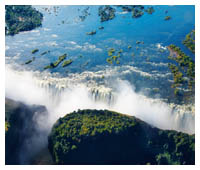
Known locally as Mosi-oa-Tunya (meaning ‘The Smoke That Thunders’) or Shungu Namutitima (meaning ‘Boiling Water’), the majestic Victoria Falls is a waterfall located on the Zambezi River. It is located in a town in western Zimbabwe that also goes by the same name. David Livingstone, a European missionary, named it after the British monarch, Queen Victoria. Declared a UNESCO World Heritage Site in 1989, Victoria Falls is one of the Seven Natural Wonders of the World and is known to be the world’s largest sheet of falling water. This geological spectacle is accessible from both Zambia and Zimbabwe as it lies on the borders of the two countries. Another way of viewing the falls is from the air in a helicopter that has bubble-shaped windows that are specially designed to make for good panoramic viewing. (B)
Day 7: Safari
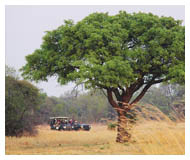
Take a flight from Livingstone, Zambia to Johannesburg, South Africa. Travel by vehicle to Bakubung Bush Lodge near Sun City. Overlooking the rich expanses of the Pilanesberg National Park, Bakubung Bush Lodge, offers the guests Big 5 viewing and several conservation projects in one of Africa's most beautiful reserves. Guests can enjoy the resident hippos in the waterhole, bushveld boma barbeques, game walks, and culinary delights. The Lodge offers air-conditioned en-suite single or double standard studio rooms, including 1 wheelchair-accessible room. All rooms open up onto a balcony or patio. Free WiFi is available and a tennis court and children's playground are on site. Activities close by including an interactive African elephant experience at the Elephant Sanctuary as well as an opportunity to see many of Arica’s predatory species at close quarters at Predator World where qualified, knowledgeable guides share interesting information on each animal.If times allows enjoy an afternoon game drive. Overnight at the safari lodge for 3 nights. (B,L,D)
Day 8: Safari
Two included game drives (morning and afternoon) as well as time for optional activities. (B,L,D)
Day 9: Safari
Two included game drives (morning and afternoon) as well as time for optional activities. (B,L,D)
Day 10: Home
Transfer from the bus lodge to Johannesburg airport for the flight home. (B)
Itinerary subject to change while touring for the best interest of the group.